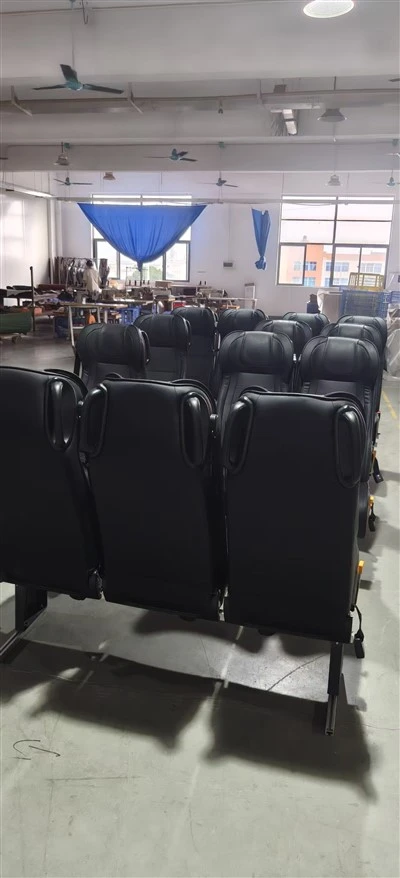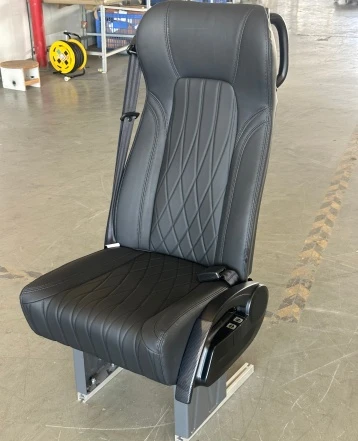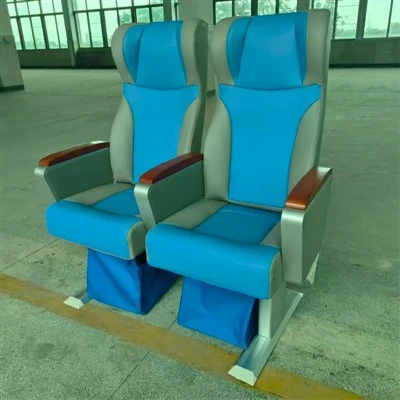
The welding components on the seat should not have defects such as welding misalignment, virtual welding, etc. The skeleton is firmly installed and reliable to use; the metal parts should be surface rust-proof, and the surface is marked with CCC certification.
2. The surface of the seat and the human body should have good breathability. The seat fabric should have flame retardant properties. The color, pattern and fabric of the whole set should be the same. No obvious color difference.
3. The outer surface of the seat should be firmly stitched, the seamed parts should not be leaked, slitted, laid off, jumpered; the outer surface should be crisp, full, clean, and should not have exposed thread, discoloration, stains, breakage, wrinkles And scratches.
4. There should be no sharp protrusions on the outer surface and inside of the seat that endanger the safety of the passenger.
5. No scratches are allowed on the side of the dust-proof plastic cover.
6. The seat adjuster and the slideway should be freely adjustable, reliable in locking, light in operation and free from sticking.
7. Each electrical function key is reliable and flexible.
8. The seat armrest and headrest are freely adjustable, the lock is reliable, the operation is light, and there is no stuck phenomenon.
9. The dimensions of the seat meet the requirements of the technical regulations.
10. The seat belt is securely installed and correct. After pulling out, it can automatically return to the position, with CCC certification mark.
11. The use of seat fabrics is strictly in accordance with the technical requirements of our company.
12. The seat meets the requirements of GB15083-2006 "Strength Requirements and Test Methods for Car Seat System" and GB11550-1995 "Performance Requirements and Test Methods for Car Seat Headrests".